The National Rise in Maternal Mortality Rates
A look into how the United States has the highest maternal mortality rates compared to other developed nations and the efforts to combat it
By Britney Kirwan
Published For JNL 221
Posted on 05/01/2023, at 6:00 p.m.
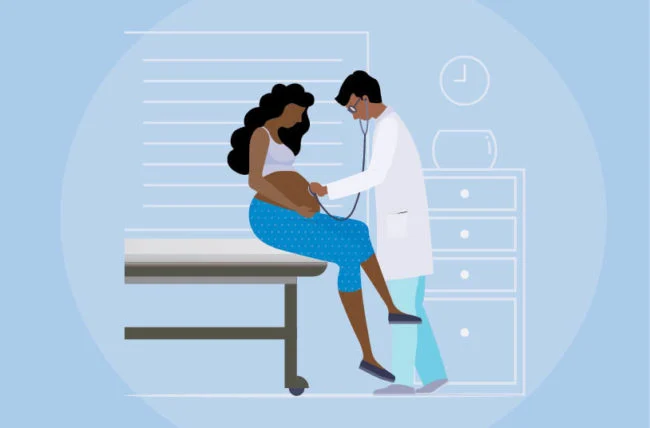
Source: Cleveland Clinic
Since 2018, maternal mortality rates in the United States have seen an upward trend. Compared to other developed nations, the U.S. has the highest average maternal mortality rate with 28.3 deaths per 100,000 live births in 2021. The second-highest country, New Zealand, had an average of 13.6 deaths, which is still a sharp decrease from the United States’ mark.
Maternal death is defined as the death of a woman while pregnant or within 42 days of termination of pregnancy. It is irrespective of the duration and the site of the pregnancy and can be related to or aggravated by the pregnancy or its management, not from accidental or incidental instances. New federal data released this year by the Centers for Disease Control and Prevention showed a spike in maternal death rates in 2021, which can clearly be interpreted in the aforementioned statistic.
In addition, 2021 numbers show that Black women have more than twice the amount of mortality rates compared to White women in the U.S. Experts have weighed in on the spike and concluded that adding the Covid-19 pandemic to the mix is what caused the major increase. Racial disparities within the data give us more insight into the issues the U.S. faces when it comes to healthcare and more specifically, prenatal care.
Despite, the Covid-19 pandemic, these mortality rates have risen for the past three decades. This problem isn’t brand new, but it took a major increase in deaths for it to become more of a recognized issue. Policies have been put in place to try to combat the problem such as the Black Maternal “Momnibus” Act of 2021. This package of bills aims to provide pre-and post-natal support for Black mothers and even extends eligibility for benefits post-partum.
As a whole, the high right of cesarean sections, inadequate prenatal care, and high rises in chronic illnesses may be the leading causes. But where do Black women fall in this?
Maternal and Infant health disparities stem from broader underlying social and economic inequities. Differences in health insurance coverage and access to care play an active role in causing much worse maternal and infant health outcomes for people of color. The intersection of race, gender, poverty, and other social factors ultimately shapes an individual’s experiences and outcomes. With that being said, the role that social determinants play in the reproductive health of communities of color.
 Source:NayaranaHealth
Coverage before, during, and after pregnancy facilitates access to care that supports healthy pregnancies. Katherine Vergara Kruczynski, a Nursing Practice Specialist for Labor and Delivery at Mass General Hospital, believes that the moments after finding out about pregnancy should be a long process, one that includes necessary steps to ensure the mother and baby are healthy.
“After a woman finds out she’s pregnant from a pregnancy test, she will contact the hospital she plans to have the delivery with directly, from there, she should have a consultation at the 8-12 week mark and be seen monthly at the 12-14 week mark,” Kruczynski said. “It is incredibly important that at the 18-20 week mark, ultrasounds are given as they scan the whole baby’s body. This full-body scan is crucial as it is used for a diagnostic of the baby’s health. After that, the woman may have to come into the office as much as two times a week before delivery.”
However, with all of the routine check-ups that the average pregnant woman must go through, Kruczynski mentions that the initial visits are vital and can greatly impact the baby’s life inside and outside the womb. With many check-ups and visits that the average pregnant woman must go through, it is crucial that they have the resources to receive this care in the first place.
People of color are more likely to be uninsured and face additional barriers to healthcare including limited access to health providers and hospitals, as well as little availability to culturally and linguistically appropriate care. These obstacles most likely can be seen in rural and medically underserved areas.
Increases in awareness and attention to maternal and infant health contribute to a rise in efforts and resources focused on improving health outcomes and reducing disparities. It all starts with access to coverage and care, increased services and providers in support of maternal/infant health, more diversity in the healthcare industry, and advancements in data collection.
According to the map of maternal mortality rates by state, Louisiana has the highest rate of numbers compared to every other state. Factors such as population density and the number of maternal mortalities in a given year are used in calculating the data. The question that arises is why does Louisiana have such elevated totals?
Lack of maternal care within the southern state has developed into a major issue. Women who live in Louisiana must travel long distances for routine checkups, emergencies, and deliveries. Areas with a scarce amount of maternity care are known as “maternity care deserts,” and pregnant women who live in these “deserts” are at a higher risk of death from severe bleeding. It can also be noted that living in a “maternity care desert” can lead to higher rates of postpartum depression and suicide.
Louisiana’s other contributing factors make it number one in maternal mortality rates and is one of the most impoverished states in the nation, leading to poor health outcomes. Poverty has also been the key element in the rising rates of chronic illnesses such as obesity, hypertension, and diabetes. Geographical challenges strike Louisiana as well; flooded with rural towns that are a hike away from any care facilities.
“For starters, the healthcare systems in these states should create visibility and transparency because it brings education, hiding data like this just adds problems,” Kruczynski said. “Healthcare providers could then go to more conferences and have the opportunities for more types of training and quality assessments. There’s probably lots of shame that come from hospitals in these states [referring to Louisiana] and they don’t want to fully admit to it. However, creating the conversation around it is the first step and makes all the difference.”
Whether these elements occur in a state like Vermont, with a maternal mortality rate of zero, or Louisiana, all of the factors mentioned must be addressed across the country at a consistent rate. This will most likely require a multifaceted approach that includes improving healthcare availability, addressing poverty/racial disparities, and improving outcomes for women with chronic diseases. Constantly spreading awareness about the issue at hand will ultimately help make a positive impact on maternal mortality rates for years to come.